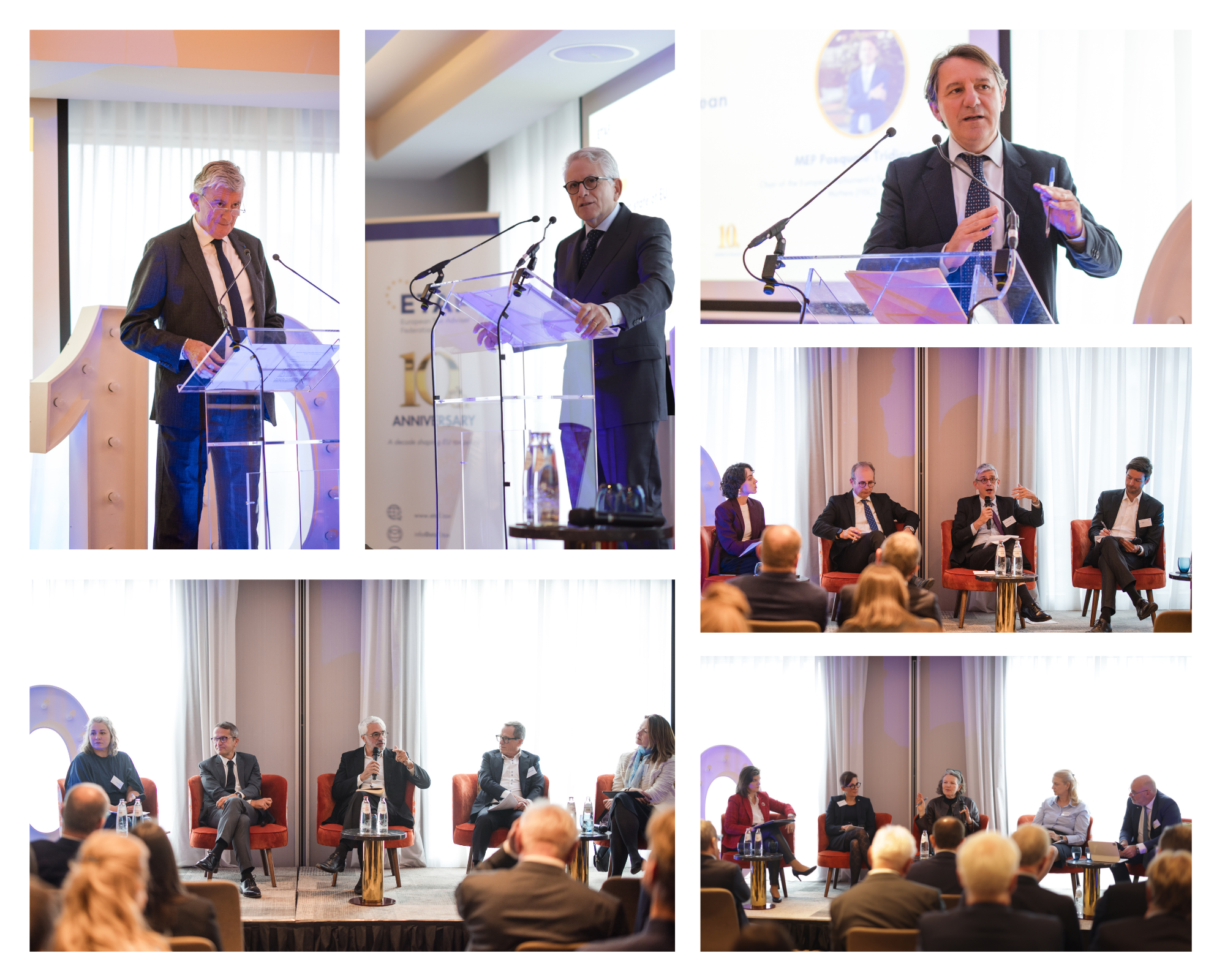
On 3 November 2026, the European Tax Adviser Federation (ETAF) celebrated its tenth anniversary with a conference at the Sofitel Brussels Europe entitled "From past to future: Lessons from a decade of EU tax developments", sponsored by DATEV. The conference brought together 120 participants in Brussels, including representatives of the EU institutions, the OECD, national professional bodies and tax practitioners, for a day full of debate on the future of the tax profession and of EU tax policy.
Opening the conference, ETAF President Philippe Arraou, who has led the Federation since its creation, reiterated ETAF’s longstanding message that every Member State should have a strong and binding professional regulatory framework for tax advisers, and shared his hopes for the decade ahead: "I wish that the European institutions finally recognise the role of our profession, for the economy and for society. Not with words, but with action."
In the first keynote, Anabela Santos, representing the Portuguese Order of Certified Accountants (OCC) – ETAF's newest member – challenged the assumption that professional regulation is an obstacle to the Single Market. Drawing on Portugal's experience, she argued that well-designed regulation makes markets more reliable, businesses more resilient and tax systems more effective.
The first panel, moderated by Jacomien van den Hurk (PwC), with Damien Charrier (CNOEC), Prof. Susanne Schmidt-Pfeiffer (Chamber of Tax Advisers Nürnberg), Oana Nicorescu (CECCAR) and Andrea Rabb (MOKLASZ), agreed that artificial intelligence will take over routine tasks while professional judgement, ethics and responsibility remain in human hands. Panellists also raised concerns about external ownership by financial investors and warned that the AML technical standards being drafted by the AMLA risk being unworkable for smaller firms.
In the afternoon, Gerassimos Thomas, Director-General of DG TAXUD, explained that the Commission will focus on implementation and simplification, notably through the Tax Omnibus and the DAC recast. He cautioned, however, that Member States' reluctance could limit the impact of these initiatives, encouraging the tax profession to support the ongoing discussions with practical input to avoid "ending up with minimum changes".
The second panel, moderated by Elodie Lamer (Tax Analysts), debated current EU proposals to declutter the EU tax agenda with Benjamin Angel (DG TAXUD), Pascal Saint-Amans (Bruegel), Kristi Raba (General Secretariat of the Council of the EU) and Philippe Vanclooster (ITAA). The discussion covered the proposed exemption of Pillar Two groups from DAC6 and CFC rules, gold-plating, the implications of the DAC recast for legal professional privilege and the need for better data on the revenue impact of legislative proposals. While their perspectives differed, the panellists called for simpler rules based on better evidence, closer involvement of Member States, respect for the rule of law across Member States and greater "European ambition".
MEP Pasquale Tridico, Chair of the European Parliament's Subcommittee on Tax Matters (FISC), then shared his vision for the future of European tax policy. He observed that Europe's tax systems still rely mainly on labour while wealth is increasingly generated in the digital economy and artificial intelligence, and called for new sources of revenue to be explored in these sectors, including the taxation of ultra-high-net-worth individuals.
The final panel, moderated by Eleanor Butler (Law360), looked at Europe's tax challenges for the next decade with Reinhard Biebel (DG TAXUD), Kurt Van Dender (OECD) and Roel Dom (Bruegel). The speakers discussed the OECD's work on digitalisation, labour mobility and the taxation of capital, the fiscal pressure facing governments and the design of tax incentives and new EU own resources. They recommended “targeted harmonization” to strengthen the Single Market, fair taxation of all forms of income and greater use of technology to make taxation simpler for taxpayers and their advisers.
The celebrations continued with a dinner for 80 guests at the Résidence Palace, with Gerassimos Thomas and MEP Pasquale Tridico as guests of honour.